Termite considerations
Then, if you see the signs, you can call us and recieve service.
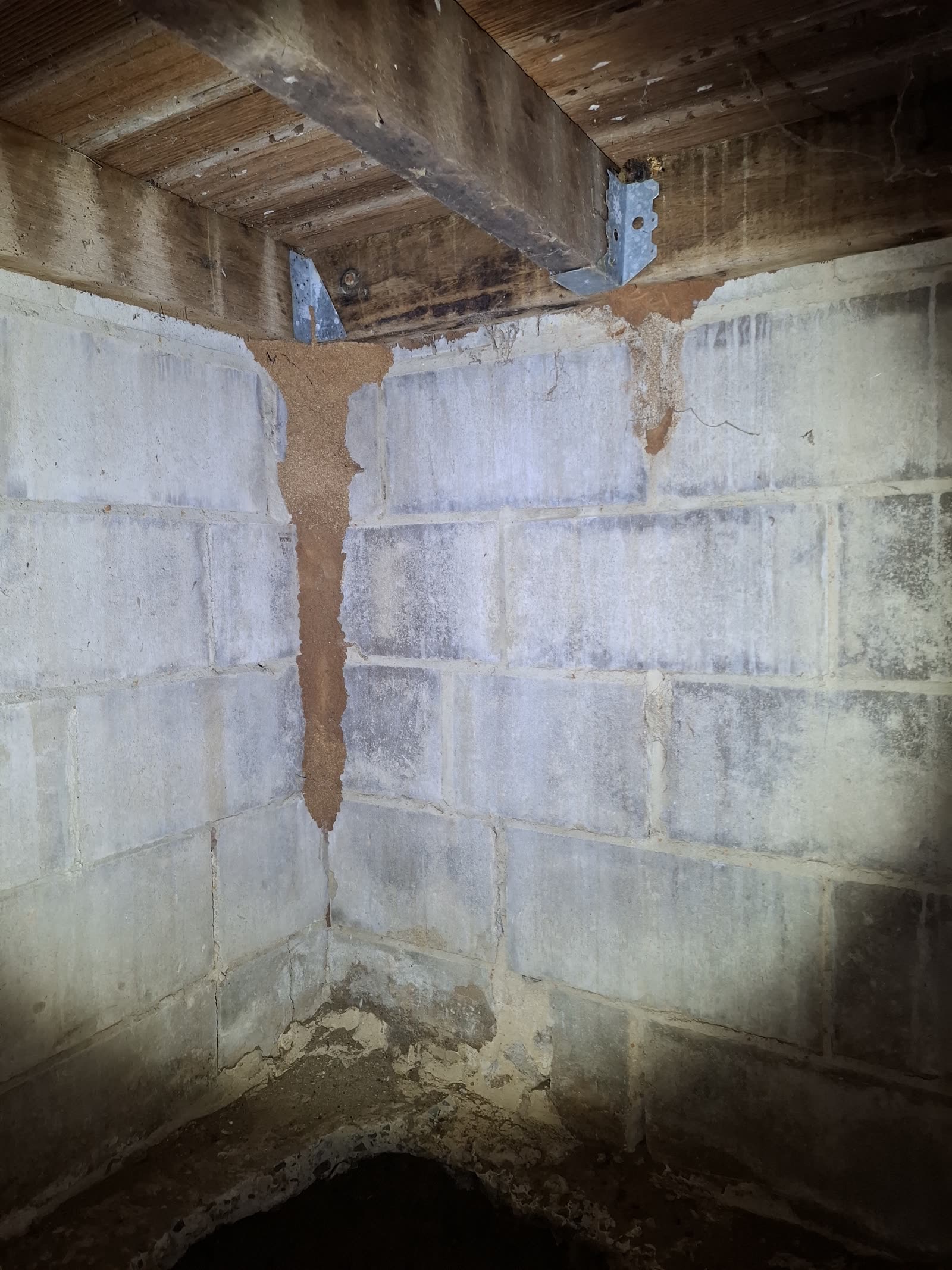
Termite mud tubes running up a subfloor wall: this is what active activity looks like.
The checklist
Drainage and Leaks- if you have poor drainage, especially where it pertains to the subfloor and walls, you may want to fix it, since termites are more likely to be attracted to damp wood. This includes any water leaks from faucets, showers, and any other “wet areas”. This goes for the outside of the home as well. Leaks and water discharged against the side of the building and create a likelyhood for a termite infestation.
Wood Decay Fungi- if any wood on your home is beginning to decay, you need to consult with a builder in order to stop the decay and prevent termites from being atracted to it.
Ventilation- Proper ventilation is important, especially to the sub-floor region, in minimising the opportunity for termites to establish themselves within a property.
Slab Edge Exposure- where external concrete slab edges are not exposed, there is a high risk of concealed termite entry. The edge should not be concealed by render, tiles, cladding, flashings, adjoining structures, paving, soil, turf or landscaping etc. A very high proportion of termite attacks are over the edge of both infill and other concrete slab types. Covering the edge of a concrete slab makes concealed termite entry easy.
Weep Holes in External Walls- It is important that soil, lawn, concrete paths or pavers do not cover the weep holes. Sometimes they have been covered during the rendering of the brick work, but should remain clean and free flowing. Covering the weep holes in part or in whole may allow undetected termite entry.
Risk factors
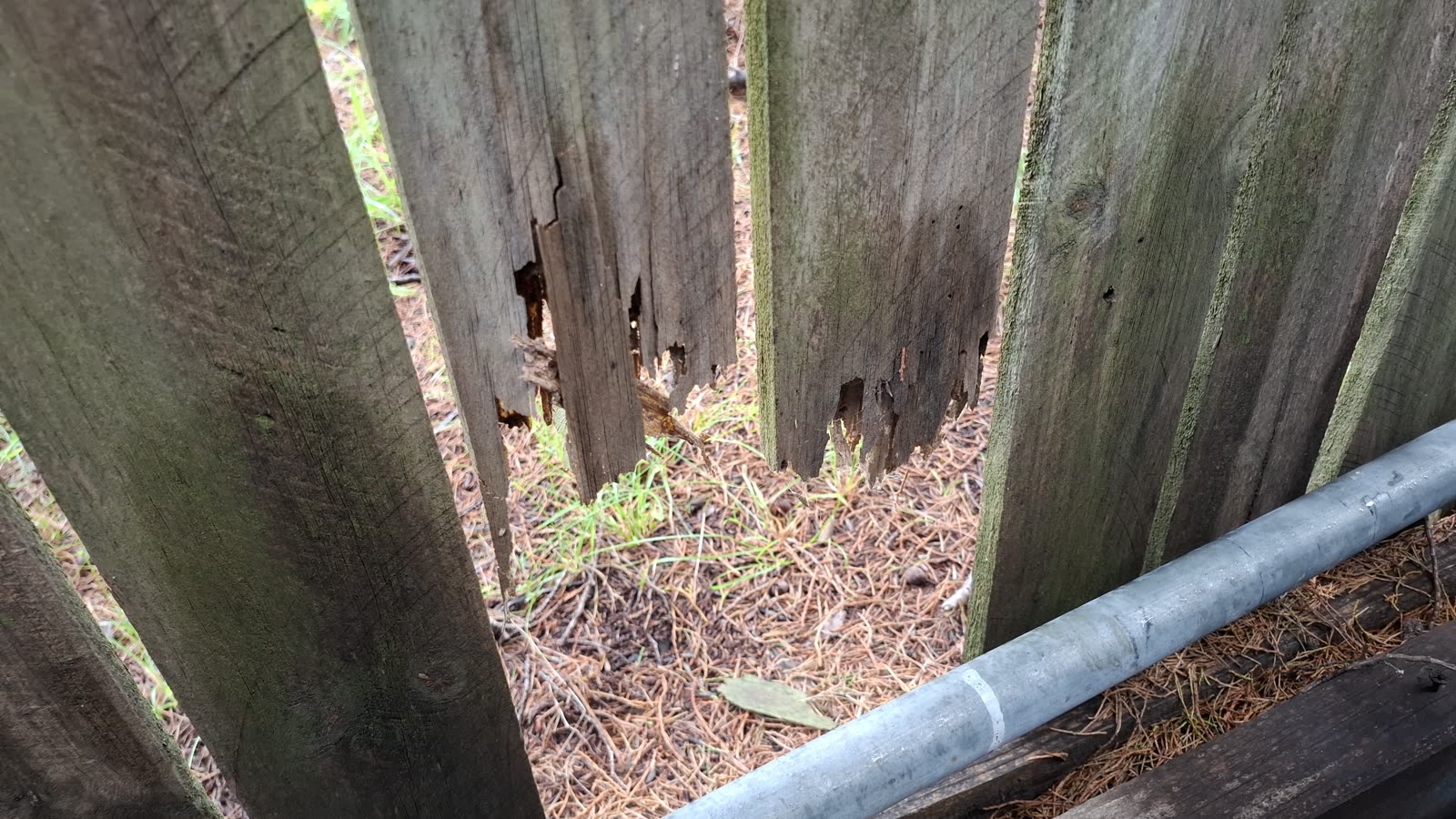
Termite damage in a timber fence paling: timber retaining walls and garden timber are common entry points.
Termites can attack any structure. Periodic maintenance should include measures to minimise possibilities of infestation in and around a property. Factors that may lead to infestation from termites include:
Situations where the edge of the concrete slab is covered by soil or garden debris, filled areas, areas with less than 400mm clearance, areas of poor drainage, leaking pipes, damp areas, form-work timbers, scrap timber, tree stumps, mulch, tree branches touching the structure, wood rot and timber retaining walls.
Termites often build nest behind timber retaining walls. Gardens, pathways or turf abutting or concealing the edge of a concrete slab will allow for concealed entry by termites.
More on termites
If you have any questions, please give us a call.
Pest licence PMT5005626616 · QBCC 15024491